
A thermoforming vacuum packaging machine is an automated packaging system. Unlike traditional vacuum sealers that use pre-made bags, a thermoforming vacuum sealer forms the bottom tray in situ using a flexible film. Once the product is placed into the formed tray, the package is vacuum-sealed or gas-flushed, then sealed with a top film and cut—enabling a continuous, streamlined production process.
The Thermoforming Vacuum Sealer performs several operations automatically in a continuous cycle. Check below the working process of the Automatic Thermoforming Packaging Machine.
Thermoforming Vacuum Sealer Working Process
Step 1: Bottom Film Feeding
The bottom packaging film is unwound from the roll and transported into the forming station.
Step 2: Film Heating and Forming
The heating system softens the bottom film. A forming mold then shapes it into cavities that match the product size and shape.
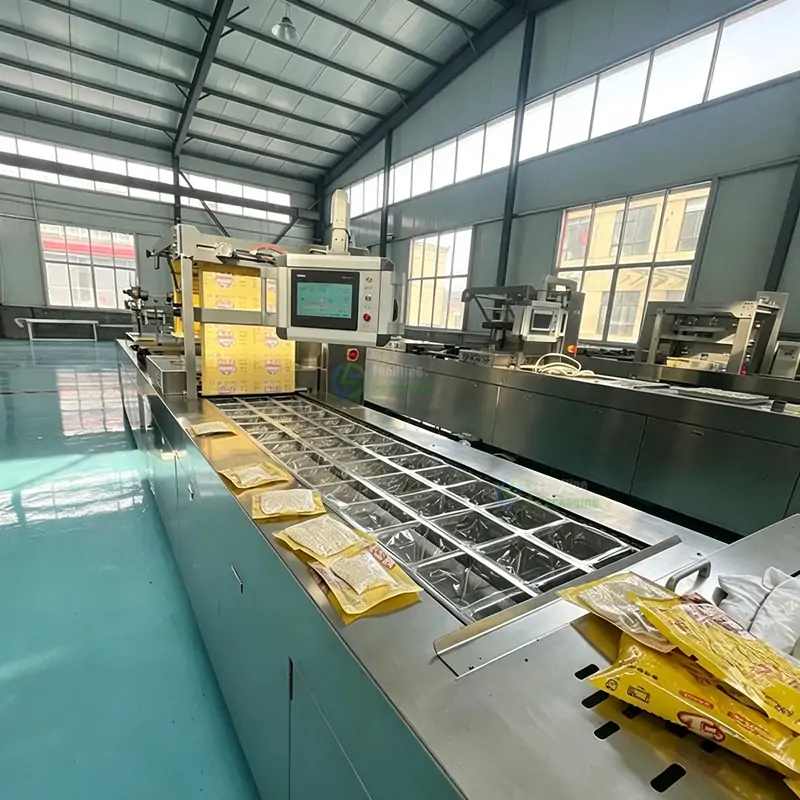
Step 3: Product Loading
Place the products into the formed cavities. Depending on production requirements, loading can be manual or integrated with automatic feeding equipment.
Step 4: Vacuuming and Sealing
The upper film is fed over the loaded products. The vacuum chamber removes air from the package, and the sealing system bonds the top and bottom films together.
For MAP packaging, a controlled gas mixture can be introduced before sealing.
Step 5: Cutting and Discharging
The cutting system separates the sealed packages into individual products or specified package groups. Finished packs are discharged for further inspection, labeling, or carton packing.
Features and Applications
1. Integrated Thermoforming
The machine heats and shapes the bottom film into trays that fit the product. Custom molds allow different shapes and sizes, creating neat, attractive packaging. It is suitable for steaks, sea cucumbers, dried tofu, chicken feet, snack foods, and fresh produce.
2. High Automation
Equipped with a PLC control system and touchscreen, the machine automates the entire packaging process, including forming, vacuuming, sealing, optional coding, and cutting. Some models also support gas flushing, such as nitrogen or modified atmosphere packaging (MAP), to help extend product shelf life.
3. Wide Range of Applications
- Food: Meat, fruits, vegetables, seafood, and pickled products.
- Pharmaceuticals: Medicines and pharmaceutical products.
- Medical: Medical devices and supplies.
- Industrial: Hardware, electronic components, and other products requiring protective packaging.