
Foodline valve bag filling machine is designed for 10–50 kg valve bags. It provides accurate, clean, and efficient packaging for powders and granules. The valve bag packing machine uses advanced weighing systems and automatic controls. It helps reduce material waste, control dust, and improve packaging efficiency.
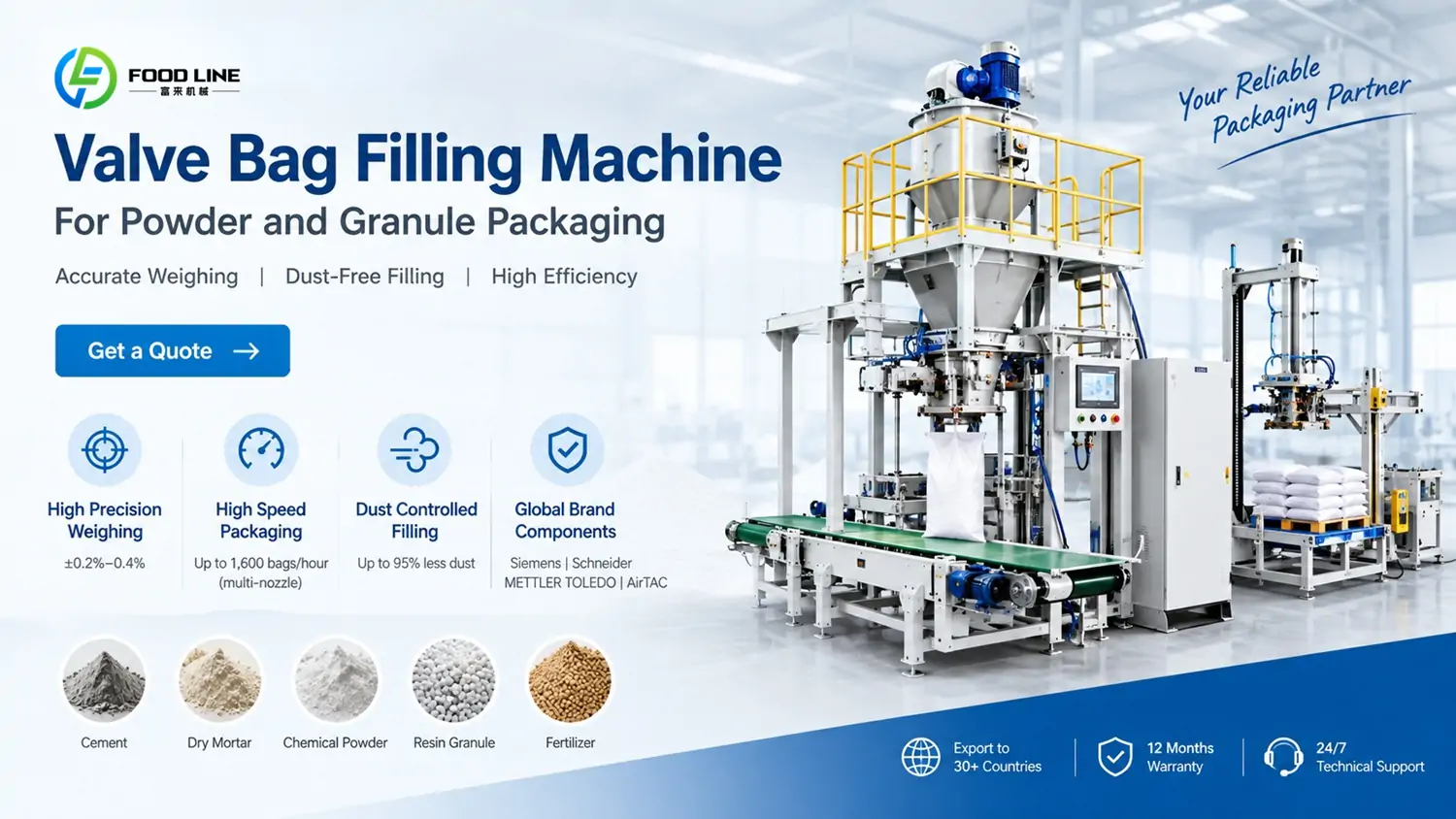
Discover Our Valve Bag Filling Machines
We offer impeller-type and pneumatic valve bag filling machines for different materials. Single-nozzle and multi-nozzle configurations are available for different production needs.
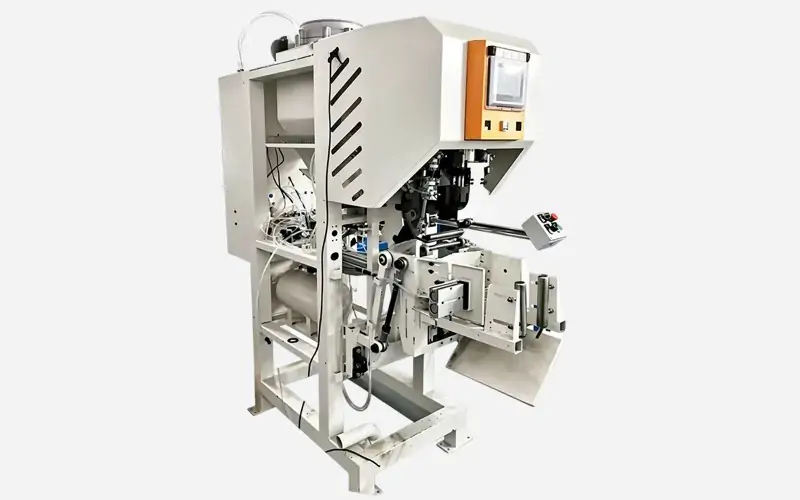
Impeller Valve Bag Filler – 400–600 bags
The impeller-type machine uses a motor-driven impeller to feed material into the bag. It is suitable for dense powders and materials that require forced feeding.
Suitable materials:
- Cement
- Dry mortar
- Gypsum powder
- Other dense industrial powders
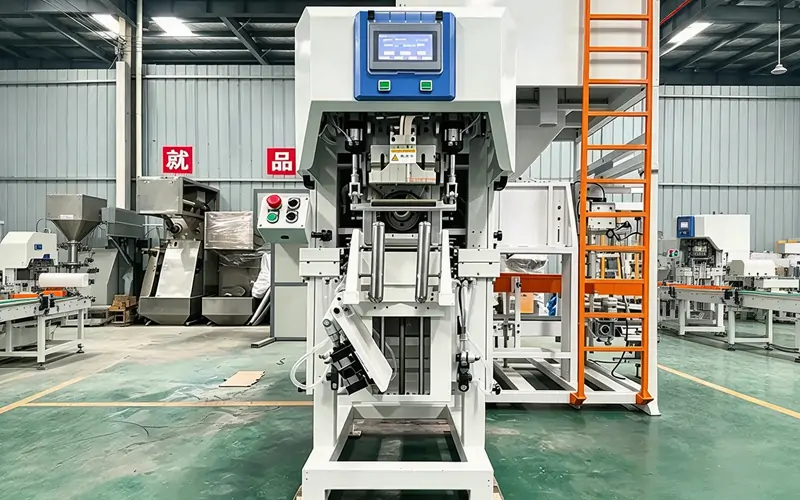
Pneumatic (Air) Valve Bag Filler – 200–400 bags
The pneumatic type uses compressed air to move material into the bag. It is suitable for compatible powders and granules that require gentle handling.
Suitable materials:
- Chemical powders
- Resin granules
- Food ingredients
- Other suitable free-flowing materials
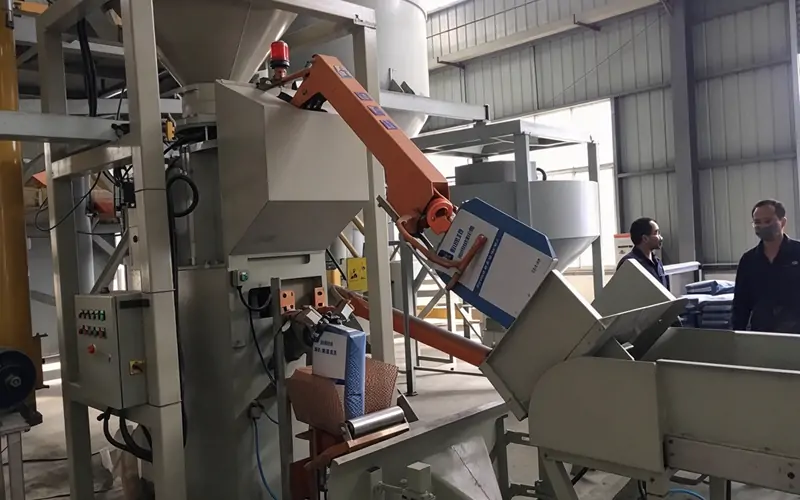
Optional Automatic Bag Placing Robot
The system uses vacuum suction cups to pick up empty bags and place them onto the filling nozzle. Its bag magazine can hold approximately 200 bags.
Key benefits include:
- Reduced manual bag loading
- More consistent bag placement
- Improved packaging line efficiency
- Lower labor requirements
Technical Specifications
| Specification | Impeller Type | Pneumatic Type |
|---|---|---|
| Bag weight | 10–50 kg | 10–50 kg |
| Filling speed per nozzle | 400–600 bags/hour | 200–400 bags/hour |
| Weighing accuracy | ±0.2%–0.4% | ±0.2%–0.4% |
| Air pressure | 0.4–0.6 MPa | 0.6–0.8 MPa |
| Power supply | 380 V, 50 Hz, three-phase | 380 V, 50 Hz, three-phase |
| Control system | Siemens PLC and touchscreen | Siemens PLC and touchscreen |
| Weighing sensor | METTLER TOLEDO | METTLER TOLEDO |
Features of Valve Bag Filling Machines
1. High-Precision Weighing
The machine uses a METTLER TOLEDO weighing sensor for accurate filling. Its weighing accuracy ranges from ±0.2% to ±0.4%, depending on operating conditions and materials.
Accurate weighing helps reduce overfilling and material waste.
2. High Packaging Speed
Choose the right filling system based on your material and production target.
- Impeller type: 400–600 bags per hour per nozzle.
- Pneumatic type: 200–400 bags per hour per nozzle.
- Four-nozzle impeller system: Up to 1,600 bags per hour.
Actual output depends on material properties, bag size, and operating conditions.
3. Dust-Controlled Filling
The enclosed filling nozzle helps reduce dust during packaging. A negative-pressure dust collection system can further improve workshop cleanliness.
This design helps control material loss and supports cleaner production.
4. Reliable Control System
The machine uses a Siemens PLC and touchscreen for simple operation. Schneider electrical components and AirTAC pneumatic components are available.
The METTLER TOLEDO weighing sensor supports accurate and stable filling.
5. Automatic Bag Discharge
After filling, the machine automatically releases the bag onto a conveyor. An optional bag sealing system can help prevent leakage when compatible with the bag design and material.
6. Flexible Packaging Solutions
The machine supports different production requirements. You can choose a single-nozzle machine or a multi-nozzle packaging system.
An automatic bag placing robot is also available to reduce manual work.
Applications of Valve Bag Filling Machines
Fulai valve bag filling machines serve different industries that package powders and granules in medium-sized bags.
- Building Materials: Cement, dry mortar, gypsum powder, and other construction materials.
- Chemical Industry: Compatible chemical powders, resin granules, and industrial raw materials.
- Food Industry: Suitable food powders, flour, starch, and selected food ingredients.
- Fertilizer Industry: Fertilizer powders and compatible granular products.
- Mineral Processing: Selected mineral powders and other dry materials.
Not Sure Which Configuration You Need?
Tell us your product and required capacity. Our team will recommend a suitable automatic packing solution.
How Does a Valve Bag Filling Machine Work?
The machine follows an automatic weighing and filling process.
Step 1: Bag Loading – The operator places a valve bag onto the filling nozzle. An optional automatic bag placing system can handle this task.
Step 2: Bag Clamping – The machine secures the bag to the filling nozzle before feeding begins.
Step 3: Material Feeding – The impeller or pneumatic system feeds material into the bag. Dual-speed feeding can improve filling control.
Step 4: Automatic Weighing – The weighing system monitors the bag weight. Feeding stops when the target weight is reached.
Step 5: Bag Discharge – The machine releases the filled bag onto a conveyor for further handling.
Step 6: Optional Sealing and Palletizing – Additional equipment can support bag sealing, conveying, and robotic palletizing.
Case Study: 25 kg Dry Mortar Packaging Line
A dry mortar manufacturer needed to improve packaging speed and reduce workshop dust. Manual filling also caused weighing errors and material waste.
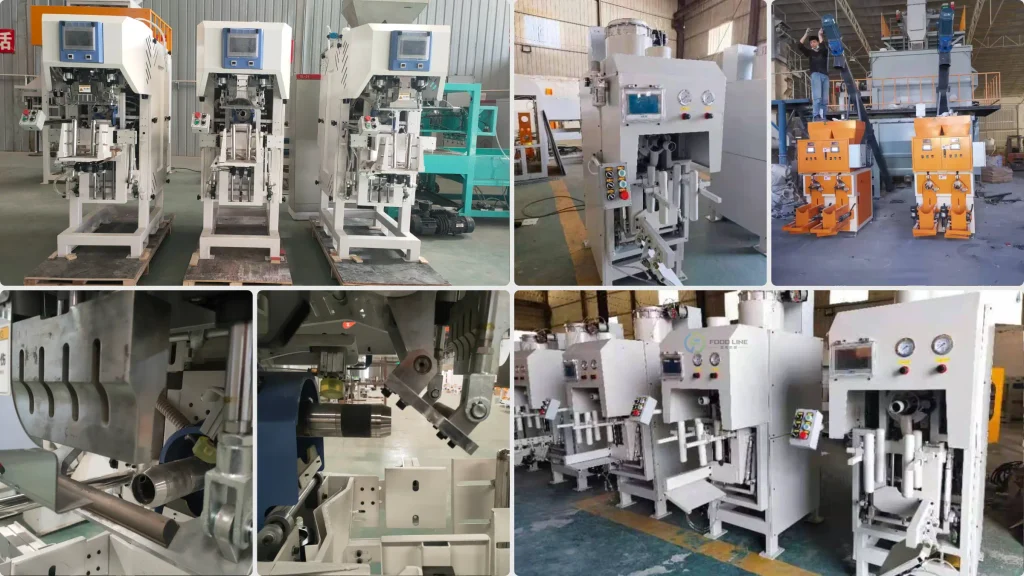
Our Solution
We supplied a four-nozzle impeller-type valve bag filling machine. The system included central dust collection and automatic bag discharge.
Project Results
- Output: Up to 1,600 bags per hour.
- Dust reduction: Reported reduction of 95% under the project conditions.
- Weighing performance: A 25 kg target bag weight with a reported error within ±50 g.
- Automation: Less manual handling during filling and bag discharge.
Why Choose Foodline Packaging Solutions?
More Than 20 Years of Engineering Experience
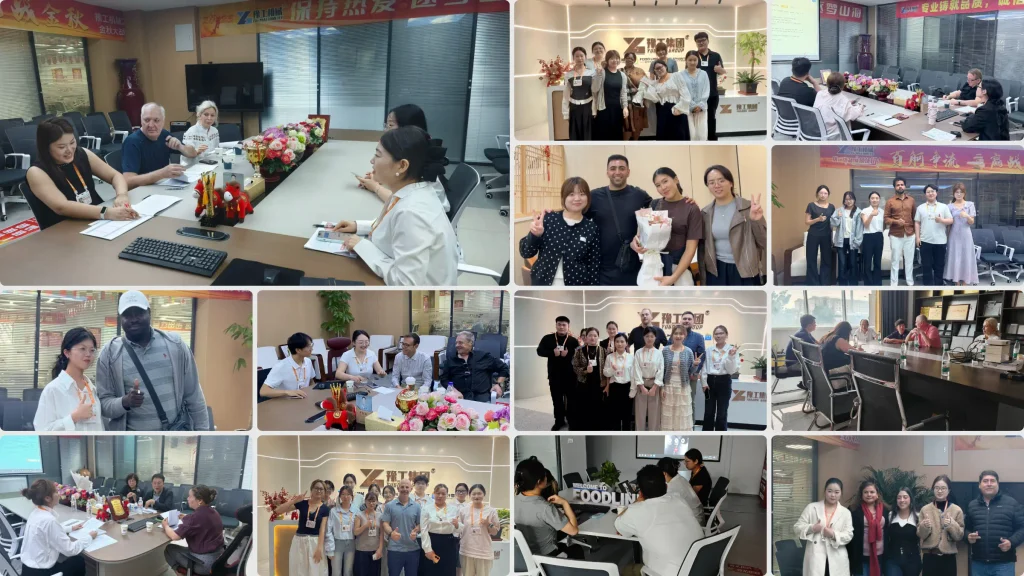
Foodline Packaging provides industrial packaging and palletizing equipment. Our solutions range from individual filling machines to complete automated packaging lines. With more than 20 years of engineering experience, our equipment has been exported to more than 30 countries. We provide a 12-month warranty and 24/7 technical support. Remote video guidance is available to support installation and troubleshooting.
Customized Packaging Lines
We can help you select filling equipment and supporting machines. Our team can also review plant layout, utility requirements, packaging materials, and estimated operating costs.
Frequently Asked Questions
1. How do I choose a valve bag filling machine?
Tell us your material name, bag weight, target output, and bag type. We will assess the material properties and recommend a suitable filling system.
2. What is the difference between impeller and pneumatic filling?
The impeller type uses mechanical feeding and offers higher output for many dense powders. The pneumatic type uses compressed air and suits compatible powders and granules that need gentler handling.
3. What bag weights can the machine handle?
The standard range is 10–50 kg per bag. Other configurations may be available upon request.
4. Can the machine reduce dust during filling?
Yes. The enclosed filling nozzle helps control dust. A compatible dust collection system can further reduce airborne particles.
Actual dust reduction depends on the material and installation conditions.
5. Can I automate the entire packaging line?
Yes. You can add an automatic bag placing robot, conveyor, sealing equipment, and robotic palletizer.
We can design a solution based on your production capacity and available space.
6. What is the delivery time?
The typical production lead time is 10–30 working days, depending on the model and configurations.