
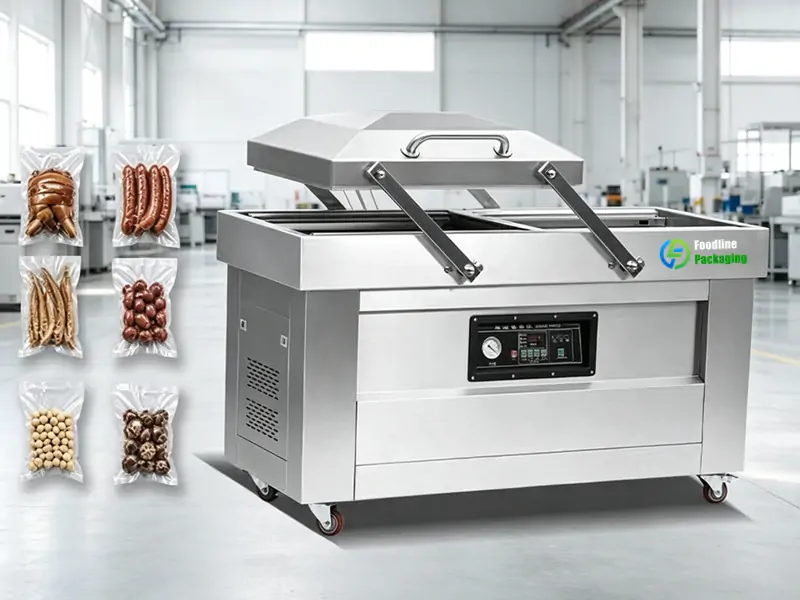
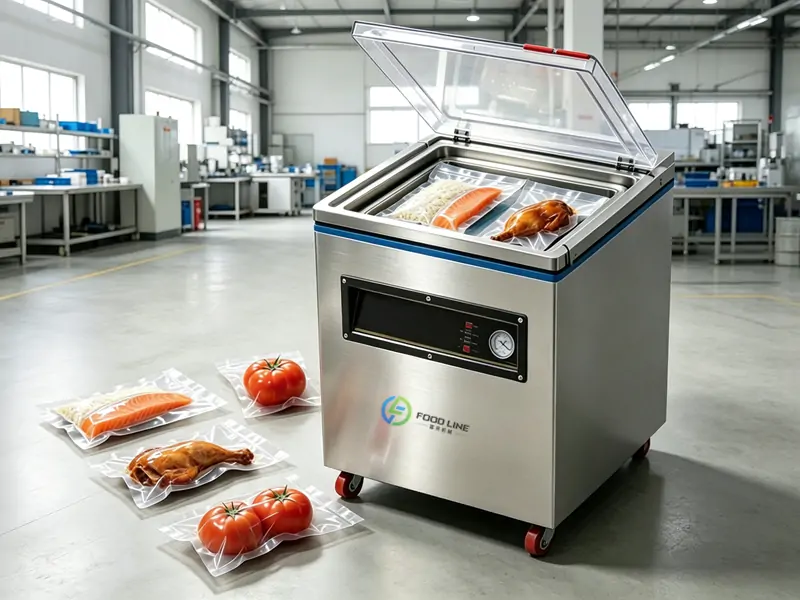
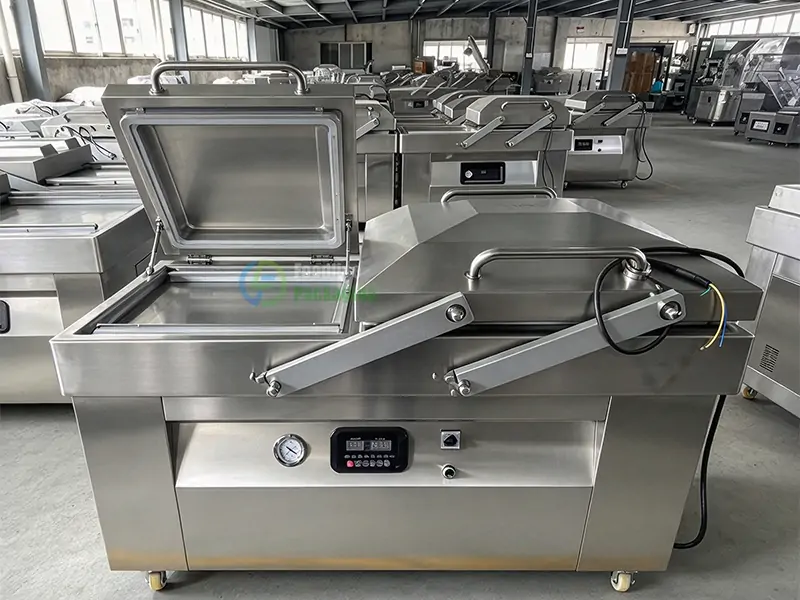
A chamber vacuum packaging machine is designed to remove air from packaging bags and seal products in a low-oxygen environment, helping preserve freshness, reduce oxidation, and protect food during storage and transportation. The chamber vacuum machines are widely used in meat processing, seafood packaging, commercial kitchens, and food manufacturing. They are an efficient solution for businesses handling different food products. Contact us to request the chamber vacuum pack machine price.
Available in single-chamber and double-chamber configurations, industrial chamber vacuum packaging machines accommodate different product sizes, packaging volumes, and production requirements. From small food businesses to large-scale processing facilities, choosing the right vacuum packaging machine helps improve packaging efficiency, reduce labor, and maintain consistent sealing quality.
Commercial Chamber Vacuum Sealer Technical Specifications
| Parameter | Specification |
|---|---|
| Machine type | DZ 400/DZ 500/DZ 600 Single chamber / Double chamber |
| Machine material | Stainless steel |
| Vacuum pump | 3–40 m³/h or customized |
| Sealing length | 260–600 mm, depending on model |
| Sealing width | Approx. 8–10 mm |
| Packaging speed | Approx. 1–8 cycles/min, depending on model and product |
| Power supply | 220V / 380V, customizable |
| Operation | Automatic vacuum and heat sealing cycle |
| Packaging material | Vacuum-compatible plastic bags, composite films, and other compatible materials |
| Application | Food processing, meat, seafood, dairy, dried foods, and more |
Applications of Chamber Vacuum Packaging Machines
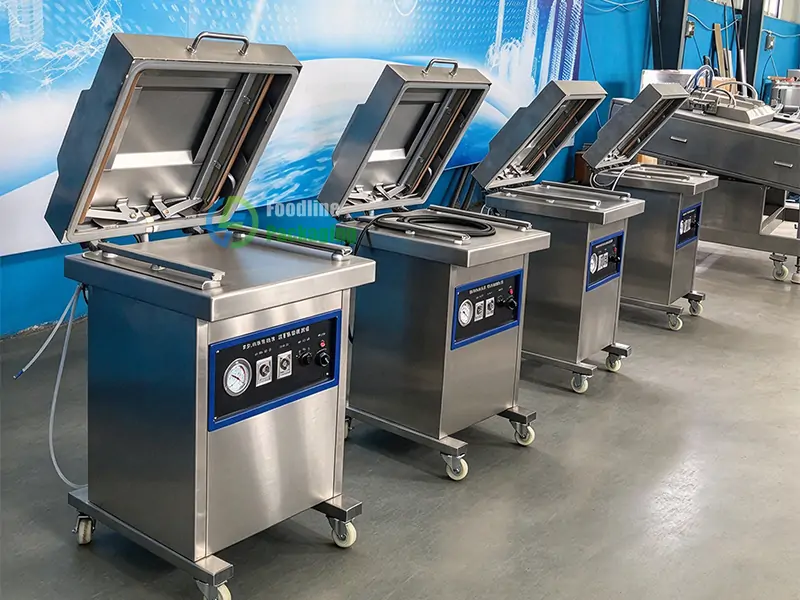
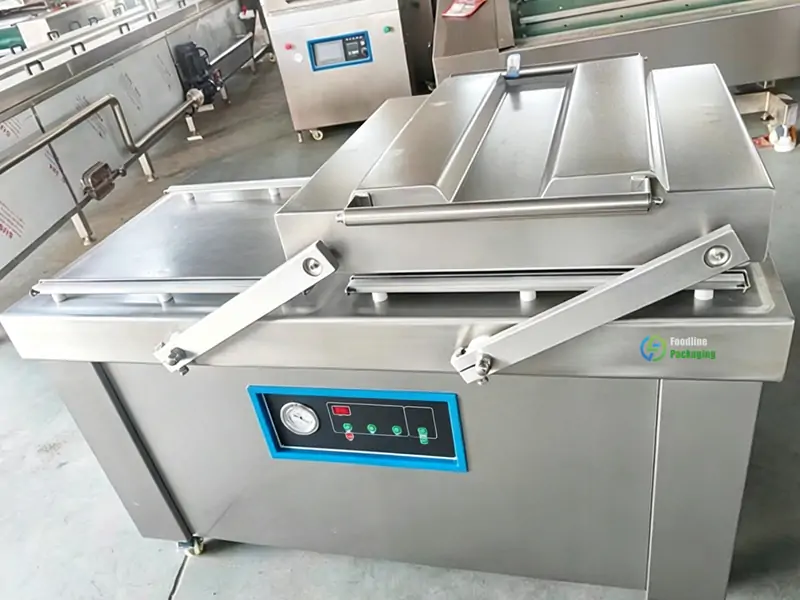
Foodline industrial vacuum sealer can be used for various food products and commercial packaging applications.
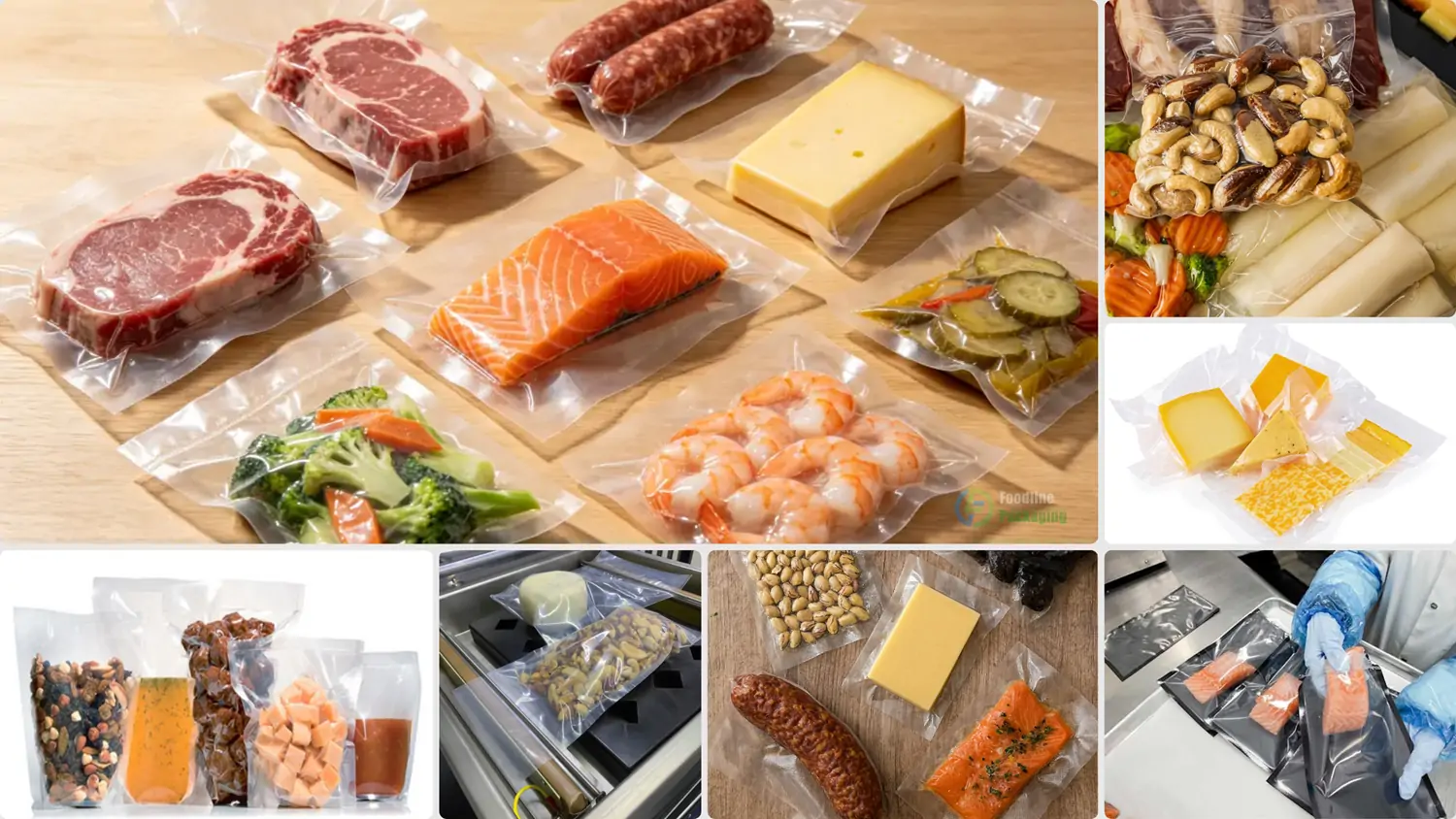
- Meat and Poultry Packaging: Vacuum packaging is widely used for fresh meat, beef cuts, pork, chicken, sausages, and processed meat products.
- Seafood and Fish Packaging: Vacuum packaging helps reduce exposure to air and moisture loss, making it suitable for fish fillets, shrimp, squid, shellfish, and other seafood products.
- Cheese, Nuts, and Other Food Products: Cheese and dairy products, Nuts and seeds, Dried fruits, Coffee beans, Rice and grains, Ready-to-eat food, Cooked food and meal portions.
Single Chamber vs. Double Chamber Vacuum Packaging Machine
Single-chamber or double-chamber model: which should you choose? Consider your daily production volume. If you need to package several hundred bags per day, a double-chamber vacuum packaging machine is the better choice. It has two chambers that work alternately. The operator loads the next batch while the machine vacuum-seals the previous one. This reduces waiting time, improves packaging efficiency, and increases daily output. Double-chamber machines also have a more robust structure, making them suitable for continuous operation and mass production. A single-chamber vacuum packaging machine is better for small businesses with low output and a limited budget.
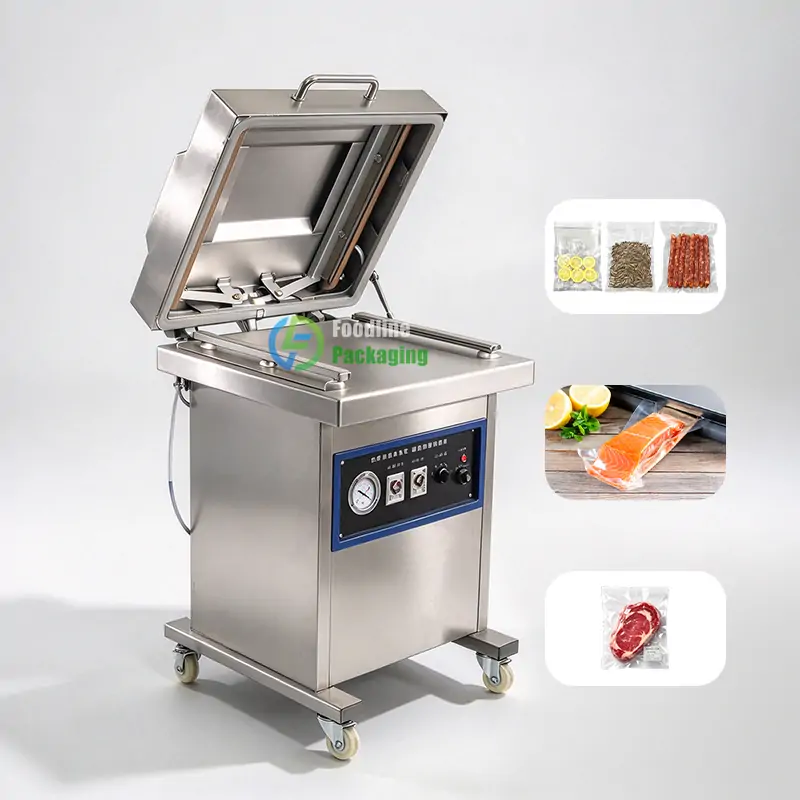
Single Chamber Vacuum Sealer
A single chamber vacuum packaging machine is a compact solution for small and medium-scale production. It features one vacuum chamber with a lid and a sealing bar.
Advantages:
- Compact structure and space-saving design
- Lower initial investment
- Easy to operate and maintain
- Suitable for small food factories, butcher shops, restaurants, and startups
- Available with different chamber sizes and sealing lengths
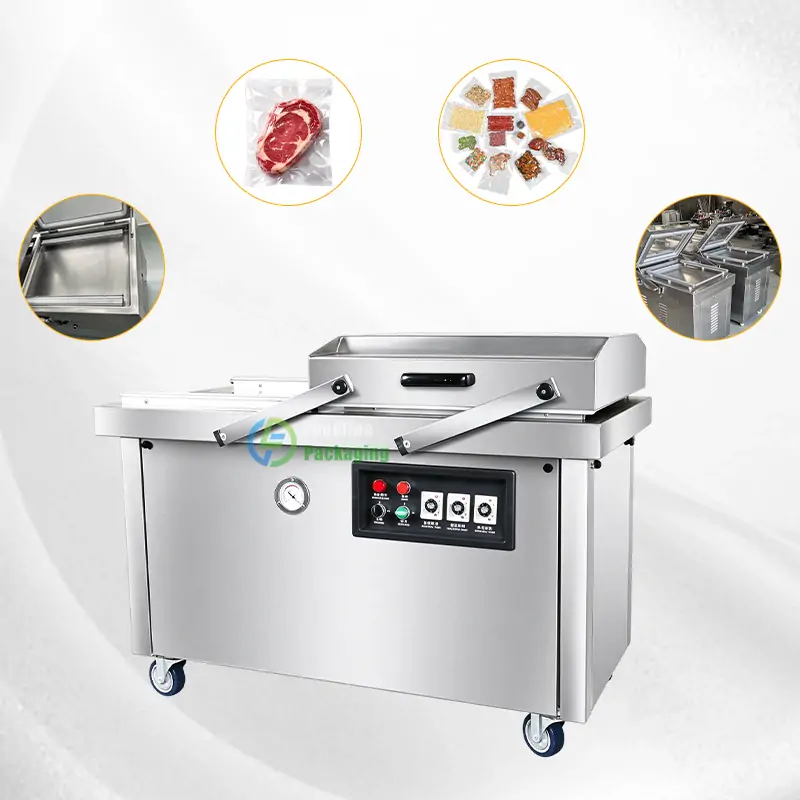
Double Chamber Vacuum Sealer
A double chamber vacuum packaging machine is designed for higher packaging efficiency. It features two vacuum chambers that can be used alternately.
Advantages:
- Higher practical output than a comparable single-chamber workflow
- Two chambers for alternating packaging operations
- Reduced idle time for operators
- Suitable for medium and large-scale food processing
- Ideal for meat, seafood, frozen food, and bulk food packaging
Need help choosing the right chamber type? Please provide your daily output and bag size. Tel/WhatsApp: +8613598866720.
How Does an Industrial Vacuum Packaging Machine Work?
An industrial vacuum sealer follows a simple packaging process. Start the cycle; the machine automatically completes air extraction and bag sealing.
- Step 1: Place Products into Packaging Bags – Load the food product into a suitable vacuum bag. Make sure the bag opening is clean, dry, and free from product residue.
- Step 2: Position the Bags in the Vacuum Chamber – Place the bag opening flat across the sealing bar. Arrange products properly to avoid blocking the vacuum port or affecting the sealing area.
- Step 3: Close the Chamber Lid – Close the vacuum chamber lid to start the packaging cycle. The machine begins extracting air from the chamber and packaging bag.
- Step 4: Vacuum Extraction – The vacuum pump removes air until the preset vacuum condition or cycle time is reached. You can adjust the vacuum level based on the product and packaging requirements.
- Step 5: Heat Sealing – The sealing bar applies heat and pressure to close the bag opening.
- Step 6: Air Release and Package Removal – After sealing, the chamber returns to atmospheric pressure.
Can a vacuum sealer package liquids or sauces?
Yes, but the machine needs to have an optional liquid protection or anti-backflow system, or an adjustable work platform to raise the bag opening above the liquid level. If your product contains a high liquid content, please inform the manufacturer before placing your order. The machine manufacturer will equip it with a suitable filtration system, anti-backflow tank, or other liquid-protection device to ensure safe and reliable operation.
Find the Right Industrial Vacuum Packaging Machine for Your Products
Looking for a reliable vacuum packaging machine for your food processing business? Foodline offers solutions for packaging meat, seafood, cheese, frozen food, dried products, or ready-to-eat meals.
Get a machine recommendation based on your products, bag size, and daily output. Contact us today to get machine specifications, pricing, and a customized vacuum packaging solution.