
Choosing the right fully automatic packaging machine is an important investment for food manufacturers, chemical companies, agricultural businesses, and other industries. The right packaging equipment can improve production efficiency, reduce labor costs, and ensure consistent product quality.
However, many buyers make the mistake of focusing only on machine price, brand reputation, or technical specifications.
The better approach is simple: first understand your packaging requirements, then evaluate machine performance and reliability, and finally compare the total cost of ownership.
This guide explains how to choose a fully automatic packaging machine and what key factors you should consider before purchasing.
1. Define Your Packaging Requirements First
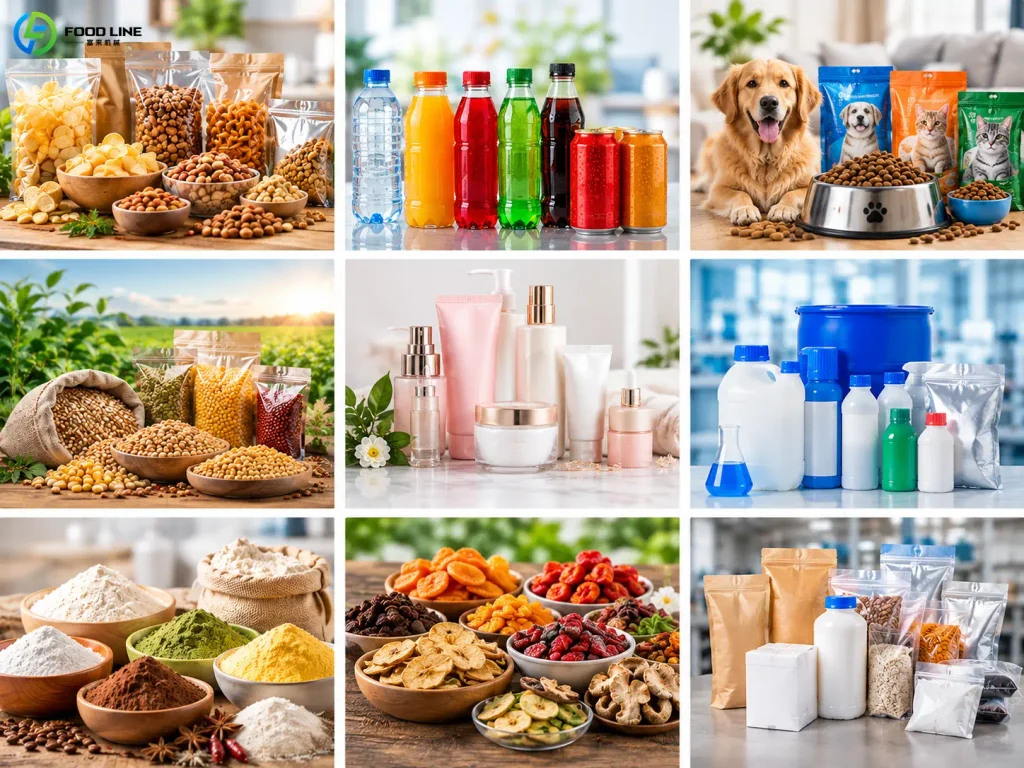
The most important step when selecting an automatic packaging machine is understanding your product and production needs.
Different products require different filling systems, packaging formats, and machine designs. The machine should be selected based on the product—not the other way around.
Product Characteristics Determine the Filling System
The physical properties of your product directly affect the type of dosing and filling system required.
- Powder products: Flour, milk powder, spices, coffee powder, and other fine materials typically require auger fillers. Dust control and anti-bridging designs are important for stable operation.
- Granular products: Rice, sugar, candy, nuts, and other free-flowing products are commonly packed using multi-head combination weighers. The system should also minimize product damage during feeding.
- Liquid products: Sauces, oils, beverages, and other liquids require piston fillers, gravity fillers, or volumetric filling systems depending on viscosity and product characteristics.
Choosing the correct filling system is essential for packaging accuracy, speed, and product consistency.
Choose the Right Packaging Format
Before purchasing a packaging machine, determine which type of packaging bag you need.
The two most common options are:
Pre-made pouch packaging machines
These machines use pre-formed bags and are suitable for products requiring flexible packaging designs, multiple bag sizes, or frequent product changes.
Vertical Form-Fill-Seal (VFFS) and Horizontal Form-Fill-Seal (HFFS) machines form bags directly from packaging film. They are ideal for high-volume production and continuous packaging operations.

You should also determine the required sealing style, such as:
- Three-side seal
- Four-side seal
- Back seal
- Pillow bag
- Gusseted bag
Selecting the packaging format in advance helps avoid costly equipment modifications later.
Specialized Machines Often Perform Better Than Multi-Purpose Machines
Many manufacturers hope to use one machine for every product. While this may seem cost-effective, it can create problems in actual production.
A practical recommendation is to limit one packaging machine to approximately 3–5 similar product varieties whenever possible.
If products differ significantly in size, shape, weight, or flowability, separate packaging lines may provide better results.
Using one machine for too many different products can lead to:
- Longer changeover times
- More complicated machine adjustments
- Lower weighing accuracy
- Reduced packaging speed
- Increased maintenance requirements
In most cases, specialized packaging equipment delivers better efficiency and reliability than an overly complicated multi-purpose system.
Balance Packaging Speed and Accuracy
Packaging capacity is usually measured in bags per minute (BPM).
Typical production ranges include:
| Production Scale | Recommended Speed |
|---|---|
| Small-scale production | 30–60 bags/minute |
| Medium-scale production | 60–90 bags/minute |
| Large-scale production | Over 90 bags/minute |
However, nominal machine speed should not be the only consideration.
Actual production performance depends on several factors, including:
- Product flowability
- Bag size and packaging material
- Filling accuracy
- Operator experience
- Product feeding stability
For food products, weighing accuracy within ±1g is often required, while some chemical products may allow tolerances of approximately ±5g.
Always ask the manufacturer to verify machine performance under actual production conditions rather than relying only on catalog specifications.
2. Evaluate the Core Features of the Packaging Machine
Once your requirements are clear, the next step is evaluating the machine itself.
Several key systems directly affect packaging quality, production efficiency, and long-term reliability.
Filling and Weighing System
The filling system is one of the most important components of an automatic packaging machine.
Different products require different filling technologies:
- Multi-head combination weighers for granular and irregular solid products
- Auger fillers for powders
- Piston fillers for liquids
- Volumetric fillers for free-flowing materials
Do not evaluate a machine based only on its advertised accuracy.
Also consider:
- Calibration stability
- Repeatability
- Filling consistency
- Material adaptability
- Ease of cleaning and maintenance
A reliable filling system helps reduce material waste and improve product consistency.
Sealing System and Package Integrity
The sealing system directly affects package appearance, leakage prevention, and product shelf life.
Common sealing methods include:
Heat sealing
Suitable for most flexible packaging films. Temperature and pressure must remain stable during continuous operation.
Ultrasonic sealing
Suitable for certain liquid products or applications where product contamination around the sealing area may occur.
Cold sealing
Used for heat-sensitive products and special packaging materials.
A high-quality packaging machine should maintain consistent sealing performance throughout long production runs.
Poor temperature control or uneven sealing pressure can result in leaking bags, damaged packaging, and product losses.
PLC Control System and User Interface
The control system determines how easy the machine is to operate and maintain.
When evaluating an automatic packaging machine, consider:
- PLC brand and reliability
- Touchscreen interface
- Multi-language support
- Recipe storage capacity
- Automatic alarm functions
- Sensor integration
Well-known PLC brands such as Siemens, Mitsubishi, and Omron are commonly used in industrial packaging equipment.
A touchscreen interface with recipe storage allows operators to quickly switch between products and packaging formats.
Depending on the machine model, recipe storage may support dozens or even hundreds of product settings.
A comprehensive sensor system, including photoelectric sensors, weighing sensors, and metal detection systems, can also reduce manual intervention and improve operational safety.
Machine Structure and Material Quality
Mechanical construction is especially important in food and pharmaceutical packaging applications.
Product-contact components should generally use food-grade stainless steel, such as 304 or 316 stainless steel, depending on hygiene and corrosion requirements.
Other important components include:
- Food-grade PU or PVC conveyor belts
- Servo motor drive systems
- Linear guide rails
- Stainless steel machine frames
- Easy-access cleaning areas
The number and quality of servo motors also influence packaging precision, speed, and response time.
A well-designed machine structure improves durability and simplifies daily maintenance.
3. Select the Right Type of Automatic Packaging Machine
Different packaging machines are designed for different production requirements.
Rotary Pouch Packaging Machine
Rotary pouch packing machines are suitable for high-volume production and provide excellent packaging consistency.
They are commonly used for:
- Granules
- Powders
- Snacks
- Seeds
- Pet food
- Other pre-made pouch products
These machines offer efficient automatic pouch feeding, filling, sealing, and output.
Reciprocating Packaging Machine
Reciprocating packaging machines are designed for greater flexibility.
They are a good choice for manufacturers handling multiple products or small-to-medium production batches.
Advantages include:
- Flexible product changeover
- Suitable for multiple packaging sizes
- Easy operation
- Good adaptability for different products
Vertical Form-Fill-Seal Machine (VFFS)
VFFS machines form bags directly from roll film, then complete filling and sealing automatically.
They are ideal for:
- High-volume production
- Single-product packaging lines
- Granular products
- Powder products
- Snacks and food ingredients
VFFS machines typically offer high efficiency but may require more setup when switching between significantly different products.
Liquid Packaging Machine
Liquid filling machines must be selected according to the physical characteristics of the liquid.
Important factors include:
- Viscosity
- Foaming characteristics
- Filling volume
- Product temperature
- Required filling accuracy
Common filling methods include atmospheric filling, pressure filling, and vacuum filling.
4. Choose a Reliable Packaging Machine Manufacturer
The quality of the machine depends not only on its design but also on the manufacturer’s engineering capabilities, production experience, and quality control system.
When selecting a packaging machine manufacturer, do not focus only on brand popularity or country of origin.
Do Not Choose Based on Imported vs. Domestic Alone
Imported equipment is not automatically better than domestically manufactured machinery.
Modern Chinese packaging machine manufacturers have made significant improvements in automation technology, precision manufacturing, and quality control.
Many domestic fully automatic packaging machines now offer excellent performance at competitive prices.
The key question should be:
Can the machine reliably meet your production requirements?
Instead of focusing only on whether equipment is imported, evaluate its actual performance, technical support, and long-term value.
Evaluate Technical Experience and Manufacturing Capability
A reliable packaging machine manufacturer should have proven experience in your industry.
Before making a purchase, consider:
- Years of manufacturing experience
- Successful customer case studies
- Core component brands
- Machine customization capabilities
- Packaging line integration services
- Factory production and quality control standards
Professional manufacturers should have established quality control procedures throughout the manufacturing process.
Common quality control stages include:
- IQC (Incoming Quality Control)
- IPQC (In-Process Quality Control)
- OQC (Outgoing Quality Control)
These systems help ensure that equipment performs reliably before delivery.
After-Sales Service Is Just as Important as Machine Quality
When an automatic packaging machine stops working, production may stop immediately.
Therefore, after-sales service can directly affect your operating costs and business revenue.
Before purchasing, ask the manufacturer about:
- Spare parts availability
- Technical support response time
- Remote troubleshooting
- On-site maintenance services
- Installation and commissioning
- Warranty policies
- Customization support
A manufacturer with responsive after-sales service can help minimize downtime and protect your long-term investment.
5. Consider Total Cost of Ownership, Not Just Purchase Price
The initial purchase price is only one part of the total cost of an automatic packaging machine.
Most industrial packaging machines can operate for approximately 10–15 years with proper maintenance.
For this reason, buyers should evaluate the Total Cost of Ownership (TCO) instead of choosing the cheapest machine available.
Operating Costs
Long-term operating expenses may include:
- Electricity consumption
- Labor costs
- Packaging materials
- Spare parts
- Maintenance
- Downtime losses
High-speed machines may require more energy, but they can also reduce labor costs and increase production output.
Lower-speed machines may be more suitable for small-batch production and multiple product varieties.
In the long run, stable and reliable equipment is often more economical than low-cost machinery that requires frequent repairs.
Flexibility and Future Expansion
A packaging machine should not only meet today’s production requirements—it should also support future business growth.
Modular equipment designs allow manufacturers to add functions such as:
- Multi-head weighing systems
- Metal detectors
- Checkweighers
- Labeling systems
- Cartoning machines
- Palletizing systems
Future compatibility with sustainable packaging materials should also be considered.
As environmental regulations become stricter, manufacturers may need to use biodegradable films, recyclable materials, or other eco-friendly packaging solutions.
Choosing flexible equipment today can reduce the need for expensive replacement in the future.
When Should You Replace an Existing Packaging Machine?
Replacing old equipment may become more cost-effective than continuing repairs when:
- Maintenance costs continue to increase
- Equipment frequently breaks down
- Product damage or packaging defects become common
- The machine cannot support new packaging materials
- Production capacity no longer meets business demand
- Spare parts become difficult to obtain
Regularly reviewing machine performance helps manufacturers make better investment decisions.
Conclusion: Four Essential Tips for Choosing the Right Packaging Machine
Selecting a fully automatic packaging machine requires more than comparing prices and specifications.
Keep these four principles in mind:
1. Let the Product Determine the Machine Type
Different products require different filling systems and packaging technologies. Specialized machines often provide better accuracy, efficiency, and reliability.
2. Evaluate Performance, Not Just Brand or Price
Domestic and international packaging machine manufacturers both offer quality solutions. Focus on actual production requirements and long-term value.
3. Choose a Manufacturer with Strong Technical Expertise
Look for proven experience, mature technology, quality control systems, and successful customer applications.
4. Prioritize After-Sales Service and Long-Term Costs
Reliable technical support, spare parts availability, and reasonable operating costs are essential for maintaining stable production.
By carefully evaluating these factors before purchasing, manufacturers can reduce investment risks and select an automatic packaging machine that delivers reliable performance for years to come.
Frequently Asked Questions
What is the best fully automatic packaging machine for my product?
The best machine depends on your product characteristics, packaging format, production capacity, and required filling accuracy. Powder, granular, liquid, and irregular products all require different filling systems.
How fast can an automatic packaging machine operate?
Packaging speed varies by machine type and product. Typical equipment operates between 30 and over 90 bags per minute, while specialized high-speed systems can achieve even higher output.
Should I buy an imported packaging machine?
Not necessarily. The best choice depends on machine performance, technical support, spare parts availability, and total cost of ownership rather than country of origin alone.
How long does an automatic packaging machine last?
With proper operation and maintenance, industrial packaging machines can typically operate for 10–15 years or longer, depending on usage intensity and machine quality.
What information should I provide when requesting a packaging machine quotation?
To receive an accurate quotation, provide details about your product type, product weight, packaging size, bag style, production capacity, and any special requirements such as nitrogen filling, metal detection, or automatic labeling.